jueves, 19 de septiembre de 2013

Healthy eating out.

If you're eating out at a restaurant or cafe, you can make choices to ensure that your meal is healthy and balanced.
It's all too easy to have more saturated fat, salt and sugar han you realise when you're not cooking your own meal.
You can also end up eating more than you would have done if you'd served up your own portions.
We often indulge in sugary and high-fat foods when it's a special occasion. But many of us are eating out more often, and this means that it's important to think about healthier choices.
The first tip to remember is that whatever and wherever you're eating, you don't need to clear your plate. Instead, eat slowly and stop when you are full.

Restaurants and cafes

Simple steps can help you make sure that you make healthier choices when eating out.
Food swaps
These swaps can make your restaurant or cafe meal healthier. Choose:
  • chicken without the skin, or lean meats such as ham, fish (not fried) or pulses instead of pies, bacon and sausages
  • tomato and vegetable sauces instead of sauces based on cream and cheese  
  • rice that is steamed or boiled instead of fried rice, such as pilau rice and egg fried rice
  • potatoes that are baked or boiled without added salt or butter instead of chips or creamy mashed potatoes
  • fruit salads, sorbets and low-fat yoghurts instead of cakes, chocolate or creamy puddings, biscuits, sweets and ice cream 
  • vegetables and salads served plain instead of served with butter, oily dressings or mayonnaise  
  • salad dressing on the side, so you can add only as much as you need
Eating out tips
These tips can help you make healthier choices when you're eating at a restaurant or cafe.
Look out for dishes highlighted on the menu as healthier options. If you're not sure why the dish is healthier, don't be afraid to ask.
More and more restaurants are putting calories for their food and drink onto their menus. You can use this information to help you decide which dish to have and help you keep track of the number of calories you're eating. An average woman needs around 2,000 calories a day, and an average man needs around 2,500, depending on how active you are.
Remember, if you can't tell from the menu how a dish is cooked, you can always ask.
  • Ask for salt not to be added to your meal during cooking or preparation.
  • Say no to bread or other nibbles before your meal arrives. Eating these before your meal can make you more likely to eat too much.
  • When you're ordering a variety of dishes to share, make sure you don't order too many. Ask the staff how many dishes they would recommend.
  • If your meal doesn't come with vegetables, order some as a side dish or have a salad with your meal. This can be instead of a starter.
  • Wait until you've eaten your main course before you order a pudding. When you've finished the main course, you may be full.
  • Have a glass of fruit juice or water with your meal.
Healthier puddings
If you'd like something sweet, there are healthier options.
Fruit is an especially good choice and can count towards your recommended five daily portions of fruit and vegetables. Learn more in 5 A DAY.
Fruit that is baked into puddings, such as rhubarb crumble, also counts towards your five fruit and veg portions.. For a healthier pudding, choose fruit-based puddings instead of puddings with cream or chocolate fillings.
Cream and ice cream are both high in saturated fat. Instead of having a dessert with cream or ice cream, ask staff if you can have a sorbet, low-fat yoghurt, fruit purée, or custard made with lower-fat milk.

Healthy lunch out and about

Many of us eat lunch on the go, whether it's from a sandwich shop, cafe, supermarket or the work canteen.
The right choices can ensure your lunch is healthier.
Remember, if you make your own lunch, you know exactly what's in your lunchbox and you can save money.
Lunch salads
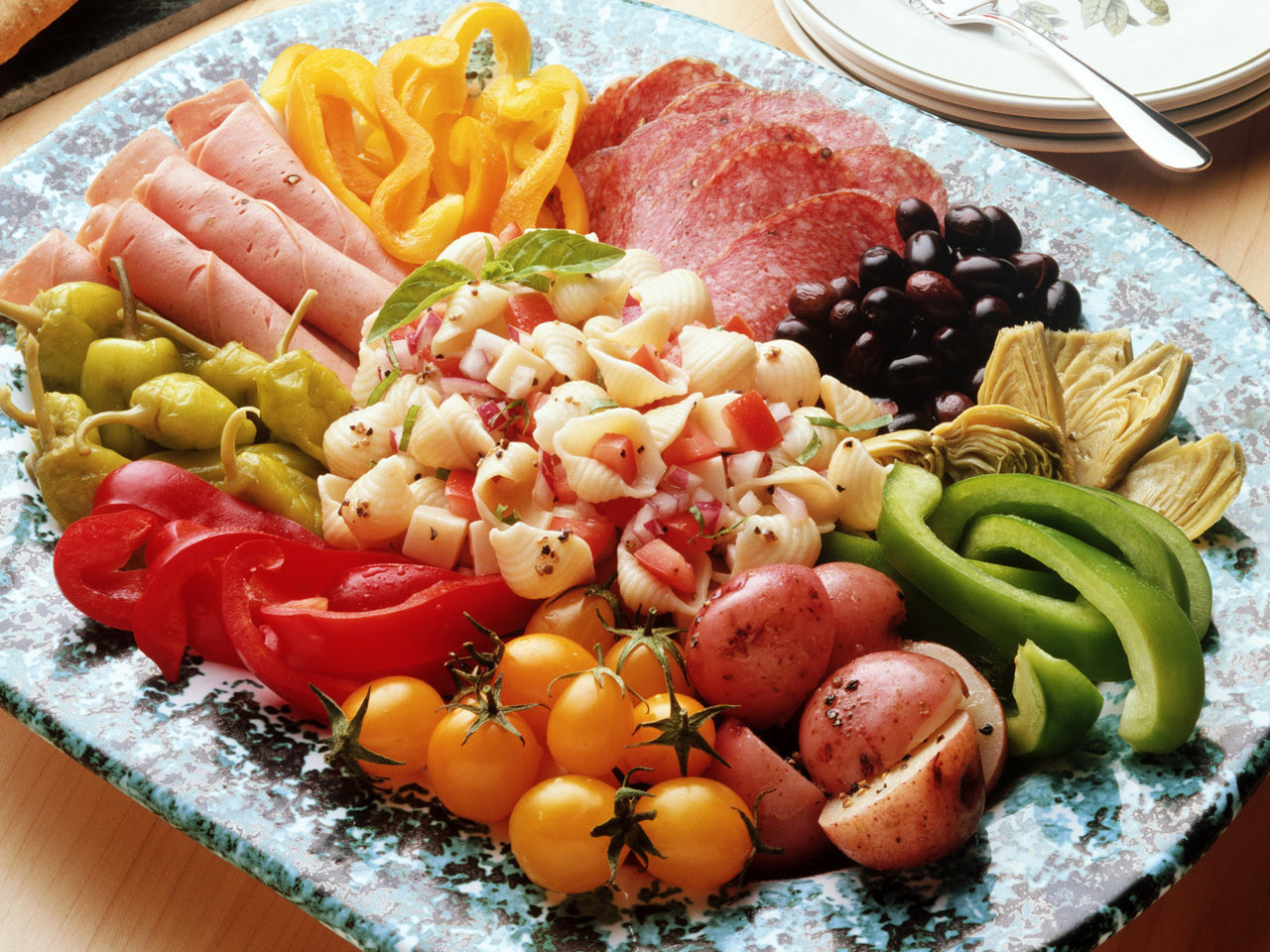
Salad can make for a healthy, filling and tasty lunch on the go. If you make them at home you'll be saving money too.
Salads that contain some starchy foods such as rice, pasta, potatoes or couscous are more filling.
Add grilled chicken (without the skin), prawns, sardines, cottage cheese, mozzarella or strips of lean ham for protein options lower in saturated fat.
Then choose a variety of veg: you could add roasted peppers and courgettes, avocado, spring onions, salad leaves, tomatoes, radishes, grated carrot or green beans.
Watch out for salads that contain a lot of mayonnaise or other high-fat dressings. This often includes coleslaw, potato salads and some pasta salads.
Pre-packed salads often have a nutrition information panel on the label so you can check how much total fat, saturated fat and salt they contain. Go for salads that are lower in fat, especially saturated fat and salt (or sodium). Learn more in food labels.
Lunch sandwiches
Whether you're making your own sandwiches or buying them from a shop or staff canteen, here are tips to help you make healthier choices:
  • Choose brown or wholemeal bread.
  • When buying pre-packed sandwiches, look at the nutrition information. Choose a sandwich that is low in fat – 3g or less per 100g, and 1.5g saturated fat per 100g. Watch out for the salt content too – food is high in salt if it contains more than 1.5g salt per 100g.
  • Have your sandwich without butter, spread or mayonnaise, especially if the filling is moist. Or have a small amount and go for low-fat mayonnaise.
  • Go for a sandwich with salad in it. Ask for extra if the sandwich is being made for you in the shop or cafe.
  • Choose healthier sandwich fillings such as lean meats (ham, beef, turkey and chicken without the skin), tuna, smoked mackerel and hard-boiled egg.
  • If you want cheese, go for edam, emmental, gruyère, mozzarella and low-fat cream cheese. They are usually lower in fat than other cheeses.
Hot food
If you prefer hot food for lunch, you can still make healthier choices:
  • Baked potatoes are a good lunchtime choice, but cut out the butter or use low-fat spread. Healthy fillings include baked beans, cottage cheese and ratatouille. Avoid ready-mixed fillings that contain lots of mayonnaise as these can be high in fat.
  • Pasta can be a healthy choice, but avoid dishes with a creamy or cheesy sauce, or mixed with lots of oil, because these can be high in fat. Tomato or vegetable-based sauces are a healthier choice and will count towards your recommended five daily portions of fruit and veg. Avoid adding cheese, or add only a little.
  • Soups can also help count towards your five portions if they contain vegetables. Try a soup with chunky vegetables, and to make it a filling meal add a wholemeal bread roll.


The eatwell plate.

The eatwell plate
The eatwell plate highlights the different types of food that make up our diet, and shows the proportions we should eat them in to have a well balanced and healthy diet. 
View a larger version of the eatwell plate.

It's a good idea to try to get this balance right every day, but you don't need to do it at every meal. And you might find it easier to get the balance right over a longer period, say a week. Try to choose options that are lower in salt when you can.
Eating healthily is about eating the right amount of food for your energy needs. In England, most adults are either overweight or obese. This means many of us are eating more than we need, and should eat and drink fewer calories in order to lose weight.

Based on the eatwell plate, try to eat:  

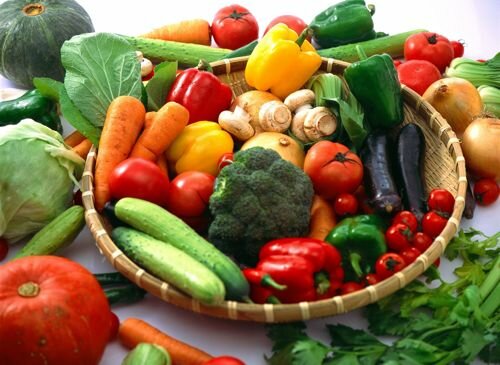
Plenty of fruit and vegetables
Did you know that we should be eating at least five portions of a variety of fruit and veg every day?
More on 5 A DAY

Plenty of potatoes, bread, rice, pasta and other starchy foods
Choose wholegrain varieties whenever you can, or eat potatoes with their skins on for more fibre.

Some milk and dairy foods
Go for lower-fat milk and dairy foods. These are healthier options to help you get enough protein and calcium.

Some meat, fish, eggs, beans and other non-dairy sources of protein
These are important sources of protein, vitamins and minerals, and form part of a healthy balanced diet.
More on meat, fish, eggs, and pulses.

Just a small amount of foods and drinks that are high in fat or sugar
Cut down on fat and sugar by eating fewer sweets, cakes and biscuits, and drinking fewer sugary soft drinks.
More on fatand sugar.

Is the eatwell plate for me?

The eatwell plate applies to most people – whether they're a healthy weight or overweight, whether they eat meat or are vegetarian, and no matter what their ethnic origin.
However, it doesn't apply to children under the age of two because they have different nutritional needs. Between the ages of two and five, children should gradually move to eating the same foods as the rest of the family, in the proportions shown on the eatwell plate.
Anyone with special dietary requirements or medical needs might want to check with a registered dietitian whether the eatwell plate applies to them.


Food and diet.

What does 100 calories look like?

100 calories of: pringles, raisins, sugar, banana, two portions of grapes and cherries
Calories are a well-known measure of the amount of energy in food. Keeping track of the number of calories in our food helps us to balance the energy we put into our bodies with the energy we use every day, leading to a healthy weight.

Calories and kilocalories

The term calorie is a commonly used shorthand for ‘kilocalorie’. On food packets you will find this written as kcal. Kilojoules (kJ) are the metric measurement of calories, and you’ll see both kJ and kcal on nutrition labels – 4.2kJ is equivalent to approximately 1kcal.

Energy throughout the day

Within a healthy balanced diet, women need on average 8,400kJ a day (2,000kcal), while men need on average 10,500kJ a day (2,500kcal).
A rough guide as to how your energy requirement can be spread throughout the day is as follows:
  • Breakfast: 20% (a fifth of your energy intake)
  • Lunch: 30% (about a third of your energy intake)
  • Evening meal: 30% (about a third of your energy intake)
  • Drinks and snacks: 20% (a fifth of your energy intake)
As you can see, any drinks or snacks you have count towards your daily energy total. If you eat more for your breakfast, lunch or evening meal, you may need to drop a snack later in the day to stay on track.

Comparing energy values: a visual guide

This guide shows energy values for 10 different foods. This will help you to visualise what 100kcal (420kJ) looks like and manage the number of calories you consume.
This amount, 100kcal, represents just 5% of a woman’s daily reference intake (4% for men), but this quickly adds up when adding ingredients during cooking or when we reach for a snack. High-fat foods have more energy per bite, while foods containing water, such as vegetables, have less.
These are not suggestions for snacks. They simply show how quickly calories can add up in certain foods. Some of the photos also show household objects, such as a pack of cards, to help illustrate the portion size.

Calories in oil, mayonnaise and butter

Oil is pure fat, which is why you only get a little over one tablespoon of olive oil; one level tablespoon of mayonnaise and just under one tablespoon of butter (a thick spread of butter on your bread) for 420kJ / 100kcal each.

Calories in cheese

Most cheese is high in fat, so for 420kJ / 100kcal you get just under a 30g matchbox-sized piece of Cheddar cheese.

Calories in sugar

Calories in the white stuff can add up if not used sparingly, especially for people who drink tea or coffee with sugar throughout the day. Four heaped teaspoons of sugar is 420kJ / 100kcal.

Calories in biscuits

A lot of biscuits are high in fat and sugar and low in nutrients, so two ginger nut biscuits add up to 420kJ / 100kcal. Other biscuits may be higher in energy.

Calories in crisps

Crisps, which are often high in fat and salt, can quickly add up to 420kJ / 100kcal. For example, the 190g tube of crisps featured in this picture contains nearly 1,000 calories, so just 10% of a tube (nine crisps) equals 420kJ / 100kcal. 

Calories in bread

A thick slice of wholegrain bread is around 100kcal and is a nutritious choice. A plain bagel is much more dense, so you’d get about half a bagel for 420kJ / 100kcal.

Calories in meat and fish

The kind of meat you eat could make a big difference to the amount of energy you get. For example, you get just a few bites of steak for 100kcal (see picture).
On the other hand, turkey and fish are both low in fat and lower in energy, so for 420kJ / 100kcal you can get three slices of turkey or a pile of large prawns.
Bear in mind, though, that this number of prawns would be high in salt so you wouldn’t want to eat these all at once.
100kcal portions of steak, turkey and prawns (300kcal total)

Calories in dried fruit

The calories in dried fruit can add up quickly as the water has been removed, making it more dense. For 420kJ / 100kcal you’ll only get just over a 30g portion of raisins, which counts as one of your 5 A DAY.
But for the same amount of energy you could eat two larger portions of different fruits, such as 80g of grapes and 80g of cherries, which together add up to 100kcal and count as two of your 5 A DAY.

Calories in fresh fruit

Fruit is a healthy quick win when it comes to counting calories. For 420kJ / 100kcal you can tuck into any of the following: a large apple; a banana; up to a punnet of strawberries or one-and-a-half grapefruit. These count towards your 5 A DAY, which should include a variety of fruit and vegetables.

Calories in vegetables

Last but definitely not least, vegetables generally contain the lowest number of calories, while bringing the added benefits of vitamins and minerals.
To illustrate this, 420kJ / 100kcal is equal to any of the following: three whole cucumbers; two heads of lettuce or three carrots weighing around 120g each.

Check the nutrition label

Remember, this page is only intended as an illustration, as all foods vary in energy content and this can depend on how they are made or prepared and on how much you eat. Most pre-packaged foods have a  nutrition label on the side or back of the packaging, which will give a guide to the energy content.
Get advice on counting calories in non-packaged foods such as loose fruit and vegetables or fresh bread.
For more information about energy values in food, see understanding calories.


martes, 17 de septiembre de 2013

                                     TOP 10 MOST POPULAR FOOD IN THE WORLD.


There is a lot of popular food around the world, and so many people who likes to eat all different stuff, but, some of the food are really popular among the people. Food like pizzas and pastas are available in the whole world, and no matter where are you, you are eating this kind of food. Cultures with no particular cuisine use these food from all around the world, and we think they are having a lot of fun, using all the ingredients, spices and what not. Well, today, we are presenting you with some food photos of the most popular food in the world. These food are really popular world wide, and they deserve a little bit of celebration. So, take a look, and enjoy the view!
          1. Chicken
                       
         2. Pizza
http://www.top-food.net/wp-content/uploads/2013/03/Pizza.jpg 
          3. Rice
                    
      4. Bread 
                     
      5. Past
    
          6. Meat
                          
       7. Fish and Sea Foo
     
        
     8. Vegetable
             
                 
      9. Italian Food
        
             
        10. Chinese Food
     

domingo, 15 de septiembre de 2013

check this kink to see thw 50 best restaurant in the world
http://www.theworlds50best.com/

Gourmet rice krispies treat bakery ‘Treat House’ to expand

MORE ON:

Treat House, which opened last month on the Upper West Side, is already expanding, capitalizing on the mini-cupcake trend and taking it to a new level.
The pint-sized 750 square-foot store at 452 Amsterdam Ave. sells nothing but Rice Krispies treats – gourmet versions, natch.
The sugar shop will be opening its own 2,500 square-foot commissary later this fall and is also looking at spaces on the Upper East Side for a second store. Stores in Long Island and Westchester may follow, as well as more in Manhattan.
Jennifer and Chris Russell came up with the Treat House idea, which is designed to look like a tree house, when creating treats with their kids to sell at charity and fundraising events.
It took them two years to develop the concept and come up with the flavors, which include butterscotch sprinkle and caramel fleur de sel. They also make homemade flavored marshmallows and ice cream sandwiches made with Rice Krispies “cookies” and double-dipped in chocolate.
“The treats will change seasonally,” said Jennifer Russell, including apple and honey flavored treats to honor the Jewish New Year.